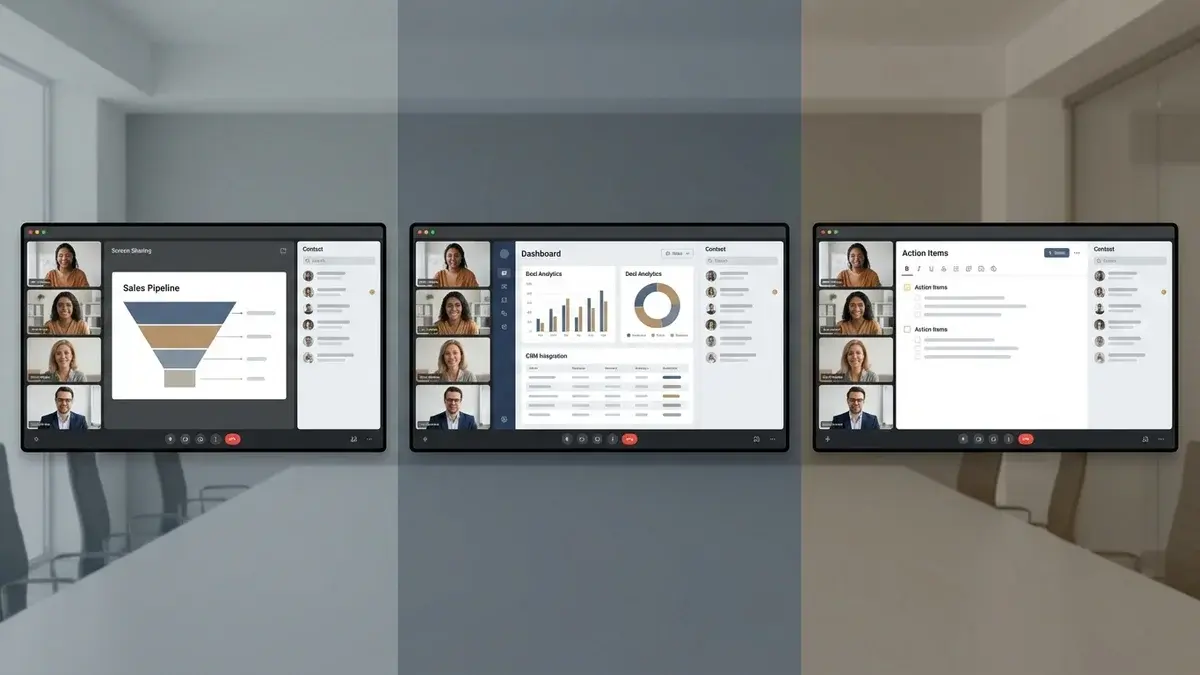
AI Sales Tools Integration: Creating a Seamless Intelligence Ecosystem
Integrating AI tools for sales teams into your existing ecosystem can deliver 3-15% revenue increases while reducing lead qualification costs by 25%. You'll need to focus on seamless data flow between platforms, automated workflows, and predictive analytics for ideal results. Implement standardized APIs, strong security protocols, and continuous training to maximize adoption rates and ROI. By establishing clear automation goals and performance metrics, you'll position your sales tech stack for sustainable growth. The complete intelligence integration roadmap reveals strategic pathways to change your sales operations.
Key Takeaways
- Establish standardized API protocols and data flow between CRM systems and AI tools to ensure seamless information exchange.
- Implement automated data enrichment and lead scoring systems to convert basic prospect information into actionable intelligence.
- Deploy comprehensive cross-platform training programs with AI-driven modules to maximize user adoption and effectiveness.
- Integrate secure data management practices with encryption and privacy controls to maintain compliance with regulatory requirements.
- Create automated workflows and feedback loops that align AI tools with existing sales processes for enhanced team performance.
The Evolution of AI in Modern Sales Ecosystems
While traditional sales processes once relied heavily on manual input and intuition, AI tools for sales teams has fundamentally changed today's sales ecosystems into data-driven powerhouses.
You'll find that modern automation tools now handle repetitive tasks, enabling your team to focus on high-value activities and relationship building.
Through predictive analytics and AI-driven recommendations, you're able to identify prime opportunities with potential revenue uplifts of 3-15%.
The seamless intelligence ecosystem you'll create integrates advanced features like automated lead scoring and performance tracking, altering customer interactions into measurable data points.
By 2026, you'll be among the 65% of B2B businesses leveraging data-driven insights to shape sales strategies.
Your implementation of AI sales tools will simplify operations, enhance customer engagement through real-time support, and deliver quantifiable improvements in sales performance.
Core Components of Seamless Sales Intelligence
As modern sales ecosystems develop, core components of seamless sales intelligence create an interconnected framework of data-driven tools and capabilities.
You'll find real-time search functionality at the foundation, enabling your sales teams to identify and qualify prospects with precision.
The Prospector tool enhances your lead generation efforts by discovering ideal contacts while data enrichment converts basic information into thorough prospect profiles.
Breaking Down Integration Barriers
Your integration strategy needs to prioritize uninterrupted data flow across AI sales platforms by establishing standardized communication protocols between your CRM and auxiliary systems.
You'll enhance your tech stack's efficiency by implementing uniform API standards and data mapping schemas that guarantee consistent information exchange between legacy tools and new AI solutions.
Cross-platform training modules can bridge knowledge gaps and accelerate user adoption by focusing on system interconnectivity and practical workflow applications.
Data Flow Between Systems
How effectively your sales tools communicate with each other can make or break your AI amalgamation success. By establishing seamless data flow between systems, you'll gain real-time access to enriched contact records and AI-driven insights.
Through strategic API implementation and secure data exchange protocols, you'll automate data entry and maximize sales efficiency.
- Combine CRM platforms with lead generation tools to create a unified data ecosystem
- Enable automated workflows to eliminate data silos and maintain accurate data across platforms
- Leverage AI-powered lead scoring to help sales teams prioritize high-potential opportunities
- Implement secure protocols for seamless data exchange between combined systems
- Reduce lead qualification costs by 25% through optimized data management
This systematic approach reconfigures your sales technology stack into a cohesive intelligence network, ensuring your team focuses on relationship building rather than administrative tasks.
Standardizing Tech Stack Protocols
Building on the foundation of effective data flow, standardized tech stack protocols form the backbone of successful AI sales tool integration. When you implement these protocols, you'll enable seamless connectivity between your AI tools and existing CRM data systems, dramatically reducing integration barriers.
Through intelligent automation and standardized APIs, you'll change how your sales teams work by eliminating manual data entry and creating unified workflows.
This optimized approach to data management guarantees your sales operations maintain peak efficiency while preserving data accuracy across platforms. You'll notice immediate improvements in sales productivity as workflow automation takes over routine tasks, allowing your team to focus on high-value activities.
Cross-Platform Training Solutions
While implementing AI tools for sales teams marks a significant milestone, successful integration hinges on thorough cross-platform training solutions that break down adoption barriers.
Cross-platform training enables your sales teams to maximize AI capabilities while reducing lead qualification costs by 25%. By integrating personalized learning experiences with existing CRM systems, you'll accelerate user adoption and technological proficiency.
- Deploy AI-driven training modules customized to individual learning curves
- Implement continuous feedback loops to track user engagement and performance
- Synchronize training protocols with existing CRM workflows for seamless integration
- Establish iterative learning paths that adapt to evolving AI capabilities
- Monitor and enhance training effectiveness through performance metrics
This systematic approach guarantees your teams master AI sales tools while maintaining alignment with best practices in sales automation, ultimately driving operational excellence across platforms.
Maximizing Data Synergy Across Platforms
As organizations adopt multiple AI tools for sales teams, maximizing data synergy across platforms becomes critical for operational efficiency.
You'll achieve enhanced performance by integrating AI-powered solutions with your CRM systems, leveraging over 1.8 billion validated business contacts and predictive analytics for precise customer targeting.
Connect your tech stack through 6,000+ Zapier integrations to create automated workflows that synchronize data across platforms.
Your sales teams can access real-time insights by combining Seamless.AI's extensive database with CRM platforms like Salesforce and HubSpot.
This integration automatically enriches contact records, converting basic information into actionable intelligence.
Strategic Implementation of AI Sales Tools
Since successful AI tools for sales teams adoption drives measurable business outcomes, your strategic implementation plan must align with specific organizational objectives and workflows.
By leveraging AI capabilities that automate repetitive tasks and enhance personalization, you'll accelerate sales engagement while improving data-driven decision-making processes.
- Deploy AI tools that integrate smoothly with existing customer data systems
- Establish clear metrics to measure increased productivity and ROI gains of 10-20%
- Implement strategic initiatives focused on streamlining administrative tasks
- Create extensive training programs to guarantee effective tool utilization
- Monitor and enhance AI performance against defined sales objectives
Your implementation strategy should prioritize systems that support revenue uplift potential of 3-15% while maintaining focus on relationship building.
Measuring Success in Intelligence Integration
The successful implementation of AI tools for sales teams demands strong measurement frameworks to validate their impact and enhance performance.
You'll need to track specific KPIs that demonstrate how AI increases sales, with organizations typically seeing 10-20% ROI uplift through strategic automation integration.
To refine your measurement strategy, establish measurable objectives aligned with your sales goals before deployment.
Setting clear, quantifiable sales objectives prior to AI implementation ensures your measurement strategy drives meaningful results.
Focus on data analysis from performance evaluations, which reveal actionable insights about customer preferences and sales professionals' adoption rates.
High-level AI users report 33% improvement in process efficiency, indicating successful integration.
Your framework should incorporate predictive analytics for lead scoring and revenue growth tracking, as companies leveraging AI consistently demonstrate 3-15% revenue increases.
Regular assessment of these metrics guarantees your AI tools deliver maximum value while maintaining alignment with strategic objectives.
Security and Compliance in Connected Systems
Your AI sales tools must implement strong data privacy practices across all connected systems, incorporating encryption, access controls, and regular security audits to protect sensitive customer information.
You'll need to make certain your integrations align with key regulatory frameworks like GDPR and CCPA, particularly when handling personal data across multiple platforms and jurisdictions.
Establishing secure APIs and vendor protocols will enhance your overall security posture while building customer trust and maintaining compliance throughout your AI sales ecosystem.
Data Privacy Best Practices
Protecting sensitive data remains paramount when integrating AI tools for sales teams across connected systems. You'll need to implement thorough data privacy strategies that align with ethical guidelines while maintaining operational efficiency.
By deploying strong security measures and access controls, you can safeguard customer information throughout your connected ecosystem.
- Apply sensitive data masking techniques to protect customer details while preserving data accuracy for analysis
- Conduct regular security audits to verify compliance with privacy regulations and industry standards
- Implement role-based access controls to manage user permissions across connected platforms
- Establish clear protocols for data handling, sharing, and storage within your connected systems
- Deploy encryption mechanisms to secure data both at rest and in transit, building customer trust through demonstrable security practices
Regulatory Framework Alignment
Strong regulatory framework alignment builds upon established data privacy practices to create an all-inclusive security foundation for AI sales tools.
You'll need to implement strong security measures, including encryption and access controls, while ensuring your systems comply with GDPR, CCPA, and other data privacy regulations.
When integrating AI into your sales ecosystem, you must establish regular security audits to identify vulnerabilities and maintain compliance with evolving standards.
Deploy secure APIs and adhere to vendor security protocols to prevent unauthorized access across connected systems.
Your organization's commitment to responsible AI use requires continuous monitoring of ethical guidelines and regulatory policies.
Future-Proofing Your Sales Tech Stack
While technological innovation continues to reshape the sales landscape, building a future-proof tech stack has become critical for sustainable business growth. To integrate AI tools for sales teams effectively and enhance efficiency, you'll need to analyze customer behavior patterns and refine your sales resources systematically.
- Implement scalable AI solutions that enable revenue growth with documented uplifts of 3-15% and ROI improvements of 10-20%.
- Deploy user-friendly interfaces that accelerate adoption rates and maximize tool utilization.
- Establish automated workflows for routine tasks, allowing teams to focus on strategic activities.
- Monitor market trends continuously to adapt your tech stack to emerging customer experience demands.
- Create evaluation frameworks to measure tool performance against key business objectives.
This systematic approach guarantees your sales tech stack remains agile, relevant, and capable of driving competitive advantage in an evolving marketplace.
Building a Culture of AI-Driven Innovation
Beyond implementing future-proof technology, organizations must cultivate an environment where AI-driven innovation becomes ingrained in daily operations. Your sales representatives can utilize AI to optimize sales tasks, from building relationships and closing to generating accurate sales forecasts, resulting in a 25% reduction in lead qualification costs.
Successful implementation requires systematic training and clear automation goals focused on increased efficiency. By integrating AI tools for sales teams into daily workflows, you'll enhance team performance across customer support and lead generation, driving revenue uplift of 3-15%.
Create feedback loops to align technology with your sales team's evolving needs, ensuring continuous improvement in tool adoption. This systematic approach to AI integration yields 10-20% higher sales ROI while fostering a culture where innovation becomes second nature to your organization's growth strategy.
Frequently Asked Questions
What Is the Best AI Tool for Sales?
You'll find that Salesforce's Einstein AI stands out as the leading AI tools for sales teams, offering predictive analytics and seamless CRM integration.
It'll automate your routine tasks, forecast sales accurately, and identify high-potential leads with precision.
You can leverage its real-time insights to boost your conversion rates by 10-20%.
For ideal results, you'll want to pair it with strong training and customization to match your specific sales processes.
Does Seamless.Ai Integrate With Salesforce?
Yes, Seamless.AI fully integrates with Salesforce, allowing you to enhance your CRM data automatically.
You'll get real-time access to accurate contact records and company insights directly within your Salesforce interface.
The integration enables you to enrich existing records with detailed contact information and leverage the platform's search engine for prospecting.
Through Zapier compatibility, you can connect with 6,000+ automation tools to create customized workflows that boost your sales efficiency.
How Can AI Be Used for Sales?
You can leverage AI tools for sales teams in several high-impact ways:
Use predictive analytics to score and prioritize leads that are most likely to convert, automate repetitive tasks like data entry and follow-ups to boost productivity, implement AI-powered forecasting to predict sales outcomes accurately, and deploy intelligent CRM systems that track customer interactions.
AI can also analyze sales calls for insights, personalize outreach at scale, and enhance your pricing strategies.
Does Seamless.Ai Have an API?
Like plugging into a vast digital nervous system, Seamless.AI's API gives you direct access to their powerful data infrastructure.
You'll tap into over 1.3 billion contacts and 121 million companies through seamless integration with your existing applications.
The API enables automated data enrichment, updating contact records in real-time based on your inputs.
You can connect it with your CRM system to optimize your sales operations and maintain data accuracy across platforms.
Final Points
Just as a symphony conductor harmonizes diverse instruments into a unified masterpiece, you'll need to orchestrate your AI sales tools into a cohesive ecosystem. With interconnected platforms driving a 43% increase in sales productivity, your tech stack's success depends on seamless data flow and cross-platform synchronization. By maintaining this systems-first approach, you're positioning your sales infrastructure for scalable, data-driven growth in an AI-powered future.
Ready to transform your sales ecosystem with AI integration? Book a free demo to see how seamless intelligence integration works in action.